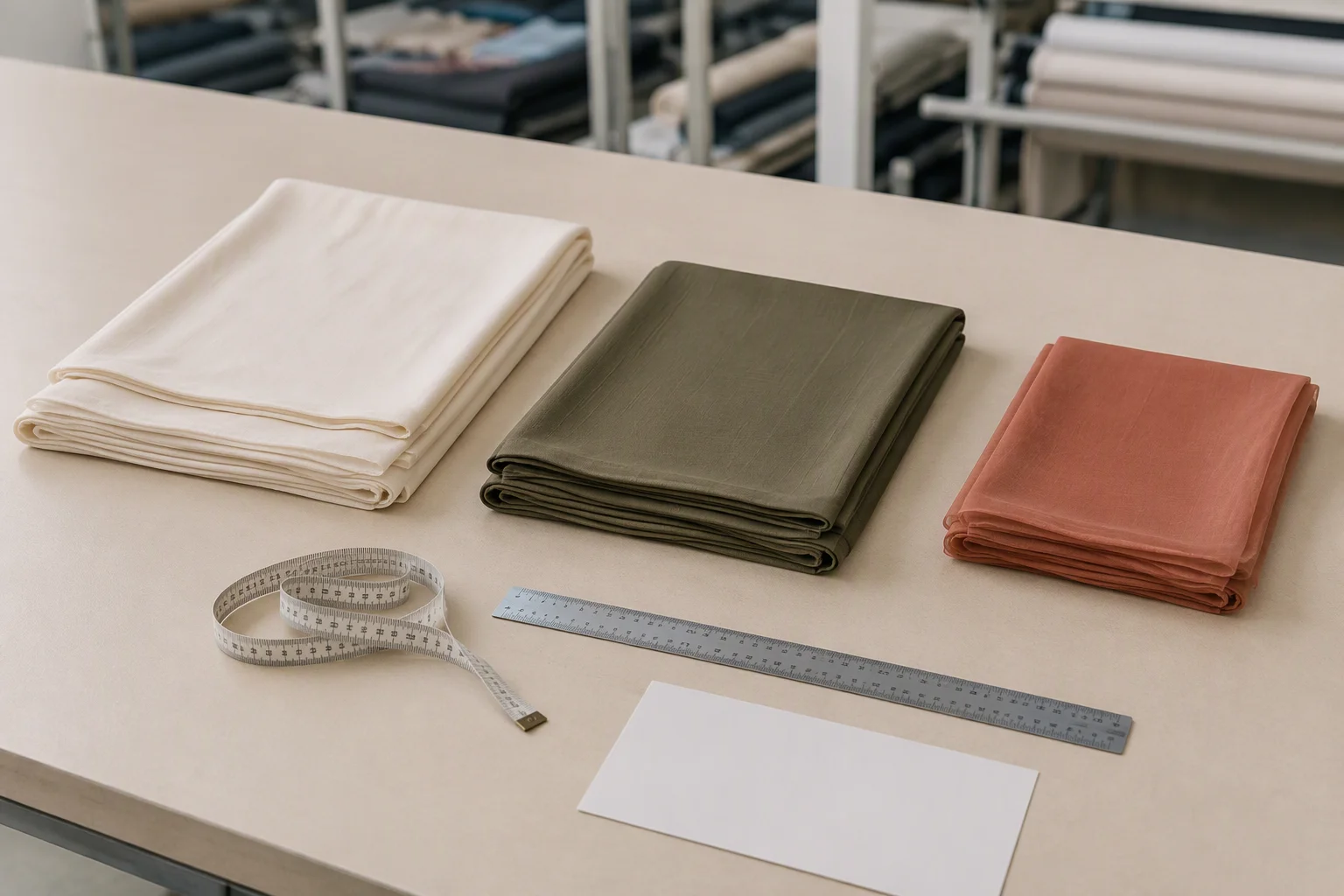
Why Finished Dimensions Decide Whether a Hijab Sells
A hijab can use the correct fibre, print and colour and still underperform if its finished dimensions are wrong. A scarf that is too short may not give a customer enough wrapping coverage. A scarf that is too wide may feel bulky around the neck or consume more packaging volume than the brand planned. A sample can look perfect on a model and still fail when the buyer measures the bulk shipment after washing.
For wholesale and private-label buyers, size is therefore not a decorative detail. It is a production specification that affects fabric yield, sewing allowances, shipping cartons, product photography, customer expectations and return rates. The most reliable approach is to approve dimensions as a controlled system: define the finished measurement, record the tolerance, account for shrinkage, and verify the result at several points in production.
This factory-side guide explains how QiuYan Factory approaches hijab size grading for modal, jersey, chiffon and embellished programs. It covers the difference between fabric width and finished scarf width, how to write a measurement sheet, how GSM and edge construction affect proportion, how to build market-specific size options, and how to connect approval samples with AQL 2.5 shipment inspection.
1. Separate Fabric Width from Finished Product Size
The first common mistake in a buyer brief is treating the fabric width as the final scarf width. A mill may supply fabric in an open width, while the finished hijab loses material through cutting, edge alignment, hemming or trim placement. A 70 cm finished scarf may require a wider cutting plan depending on the edge construction and the fabric’s usable width.
A technical specification should record at least four different measurements:
1. Usable fabric width: the width available after removing the selvedge or unstable edge.
2. Cutting size: the rectangle or shaped piece cut before finishing.
3. Finished size: the measurement after hemming, trimming, pressing and final inspection.
4. Post-wash size: the measurement after the agreed care-test condition.
For a standard lightweight modal program, a buyer may request a finished size of 180 × 70 cm. That number is not enough on its own. The buyer should also state whether the length is measured from finished corner to corner, whether the width is measured at the centre or along the short edge, and whether the measurement is taken before or after washing.
For a rectangular product, we normally measure the scarf flat on a clean table without stretching it. For a triangular or specially shaped product, the measurement sheet should show a simple diagram with named points. This prevents a factory operator, buyer and third-party inspector from interpreting “length” differently.
2. Build a Size Grading System Instead of Random Size Changes
Size grading means creating a controlled family of dimensions from one approved base specification. It is different from making one scarf longer because a buyer sends a message asking for “a little more coverage.” Random changes create inconsistent cutting markers and make it difficult to compare samples with bulk.
A controlled grading table might include:
| Size code | Finished length | Finished width | Intended use |
|---|---|---|---|
| S | 160 cm | 60 cm | compact styling or younger customer profile |
| M | 180 cm | 70 cm | core wholesale size |
| L | 195 cm | 75 cm | fuller wrap and premium styling |
The values above are development examples, not a universal market standard. The buyer should select the range from customer feedback, model testing and the intended styling. The important point is that each size must have a separate code, measurement tolerance and approval sample.
For a DTC brand, a three-size range can create a clearer product page than a vague “one size fits all” claim. For a boutique buyer, however, one core size may be more efficient if the store wants a simple stock-keeping unit system. The factory can support either approach, but the production documents must state which approach has been approved.
3. How GSM Changes Perceived Size and Drape
GSM means grams per square metre, or the mass of the fabric over a standard area. It does not directly define the scarf’s finished dimensions, but it changes how those dimensions behave in use.
A 60–80 GSM modal scarf can appear more generous because it collapses into soft folds and drapes around the shoulder. A 130–160 GSM stretch jersey scarf has more body and recovery, so the same 180 × 70 cm rectangle may feel more compact when wrapped. A 55–75 GSM chiffon scarf may need additional width or a carefully selected edge finish because its light body and slip can change how much usable coverage the wearer perceives.
This is why a buyer should not copy the same size from modal to jersey without a wear trial. The physical measurement may match, while the wrapping behaviour does not. In a sample review, check forehead coverage, chin coverage, shoulder drop, pin placement and the amount of fabric remaining after one complete wrap. Record those observations next to the numerical measurements.
4. Allow for Shrinkage Before You Approve the Marker
Shrinkage allowance must be calculated before bulk cutting, not after the shipment arrives. Modal, cotton and regenerated cellulosic fibres can respond differently to moisture, heat and drying. Jersey can also change through relaxation of stretch and knit structure.
For each fabric, the development sample should be measured before and after the agreed wash test. Record length change and width change separately. A scarf that loses 2% in length but only 0.5% in width will need a different cutting allowance from a scarf that changes evenly in both directions. The buyer should not accept a supplier’s generic “low shrinkage” statement as a substitute for a measurement report.
A practical approval record includes:
- Fabric composition and construction.
- Target GSM and tolerance.
- Cutting dimensions.
- Finished dimensions before washing.
- Finished dimensions after the agreed wash cycle.
- Drying and ironing condition.
- Acceptance tolerance for the approved size.
For example, if the approved post-wash size is 180 × 70 cm, the cutting plan may need to be larger to compensate for expected relaxation. The actual allowance depends on the fabric and finishing process. It should be calculated from the factory’s test result, not inserted as an unverified fixed percentage.
5. Edge Finishing Changes the Final Measurement
The edge is where size control becomes practical. A baby rolled hem, pin hem, overlock, hand-rolled silk edge, lace trim or tassel treatment uses a different amount of material and applies a different tension to the scarf.
On a lightweight modal scarf, an unstable edge can curl inward and make the product measure smaller than the cutting pattern. On a lace-edge design, the trim can add weight along the long sides and pull the base fabric into a slight wave. On a tassel design, fringe length should be recorded separately from the fabric body so the buyer knows whether the advertised length includes the finished fringe.
For each edge type, the specification should include:
1. Edge construction name.
2. Target visible width or trim width.
3. Seam allowance or fold allowance.
4. Corner treatment.
5. Measurement point after pressing.
6. Visual acceptance standard for waviness, puckering and loose threads.
A size sheet that says only “neat hem” is not production-ready. The operator needs a measurable construction, and the inspector needs a visible standard.
6. Market-Specific Proportions Need Wear Testing
Buyers serving the Gulf, Europe, North America or Southeast Asia may receive different customer feedback on the same scarf size. Climate, layering, styling habits, garment silhouettes and customer height all influence the preferred proportion. However, a factory should not turn a market stereotype into an unsupported fixed claim. The safe process is to test a small size set with the buyer’s actual customers or model references.
A buyer can compare three prototypes using the same fabric, print and edge finish:
- A compact option for lighter coverage and lower packaging volume.
- A core option for everyday styling.
- A fuller option for layered wrapping and longer drape.
Photograph each prototype in the same camera setup and record the exact measurements. This lets the brand review the difference without confusing size changes with colour, print scale or fabric weight. If the artwork is directional, verify that the print repeat remains visually balanced on every graded size.
7. Print Scale and Pattern Placement Across Sizes
A print designed for a 180 × 70 cm scarf can look crowded or too empty when transferred to a different proportion. A large floral motif may be cropped at the border of a longer scarf. A small geometric repeat may become visually noisy on a compact size.
Before approving size grading, ask the factory to confirm whether the artwork will be:
- Scaled proportionally.
- Kept at the same motif size with more or fewer repeats.
- Repositioned around a border or corner.
- Adapted for a directional layout.
The print file should have a named revision. The size sheet should reference that revision so a production operator does not use the artwork for the original size on a new marker. For reactive or digital printing, colour approval should still be checked against the approved standard, with a practical Delta E target agreed by the buyer and factory. A target such as ΔE ≤ 2.0 may be appropriate for a controlled colour program, but the actual acceptance limit belongs in the signed approval record.
8. Turning the Specification into a Tech Pack
A tech pack is the controlled document that translates the buyer’s product idea into production instructions. For a hijab, the dimension page should include a flat sketch, measurement points, tolerances, fabric details, edge construction and packaging fold direction.
At minimum, include:
- Style name and SKU code.
- Fabric composition and target GSM.
- Finished length and width for every size.
- Measurement tolerance in centimetres.
- Pre-wash and post-wash condition.
- Edge finish and visible trim dimensions.
- Print or colour artwork revision.
- Label placement and fold direction.
- Sample approval date and revision number.
The factory should return a marked measurement sheet with the pre-production sample. If the buyer changes the length after approval, issue a new revision rather than editing an old file informally. This protects both parties when several colourways or sizes are produced at the same time.
9. Quality Control: Measuring Bulk Without Creating False Rejections
AQL 2.5 is a sampling system used to assess whether a production lot meets the agreed quality level. It does not replace a clear size specification. If the tolerance is not written, an inspector cannot determine whether a two-centimetre difference is acceptable or a defect.
For bulk inspection, define:
1. How many pieces are measured from the selected sample.
2. Which measurement points are checked.
3. Whether the scarf is relaxed, pressed or washed before measurement.
4. What tolerance applies to length, width and trim placement.
5. How size labels are matched to the physical dimensions.
A factory can use in-line checks during cutting and sewing, followed by final measurement checks before packing. The objective is to identify drift early, when correction is possible, rather than discover a mixed size run during container loading.
Alongside dimensions, inspect GSM against the approved range, colour against the approved standard, edge tension, print placement, loose threads and packaging labels. A product can pass its length measurement and still create a return problem if the label identifies the wrong size or the print is positioned inconsistently.
10. Sample and Bulk Timing for a Size-Graded Program
A one-piece approval sample is useful for confirming the base fabric, proportions and edge finish. If the order contains three sizes, however, the buyer should request or approve a size set rather than assume that one approved size automatically proves the others.
A practical development sequence is:
- Initial specification review: one to two working days.
- First sample: approximately 5–7 working days, depending on fabric and trim availability.
- Size-set revision: another 5–7 working days when a new marker or edge adjustment is required.
- Bulk production: commonly 15–35 working days after final approval, depending on style complexity, fabric availability and order volume.
- Final inspection and packing: scheduled before the agreed shipping date.
These are planning references, not a guarantee for every SKU. A special lace, tassel, custom print or unusual size can change the timeline. Confirm the actual schedule in the quotation and purchase order.
11. Buyer Checklist Before Placing the Bulk Order
Before releasing a production order, confirm that the supplier has written down:
- Finished dimensions, not only cutting dimensions.
- A tolerance for every measurement.
- Pre-wash and post-wash conditions.
- Fabric composition, GSM and usable width.
- Edge construction and visible trim size.
- Print scale, placement and artwork revision.
- Size codes, labels and carton packing ratio.
- One-piece approval sample or approved size set.
- Standard custom bulk MOQ of 100 pieces per colour, with any 300-piece special-construction requirement stated in the quotation.
- AQL 2.5 inspection method and final measurement points.
This checklist turns “please make it slightly bigger” into an executable factory brief. It also gives the buyer evidence to compare the sample, bulk production and final shipment.
Factory Support for Size-Graded Private Label Programs
QiuYan Factory develops modal, jersey, chiffon and embellished hijab programs for wholesale, private-label and OEM/ODM buyers. Our team can review your finished size, fabric composition, GSM target, edge construction, print artwork and packaging requirement before sampling.
For standard custom bulk, the usual MOQ is 100 pieces per colour. A one-piece approval sample can be made first, and special constructions may require 300 pieces per colour after the specification is confirmed. Sampling is typically 5–7 working days, while bulk timing depends on the confirmed style and order volume.
Send your size sheet, reference sample or target measurements to melody@wennuanfactory.com. You can also message QiuYan Factory on WhatsApp +86 150 2459 7603 with the product category, target dimensions, fabric preference and estimated quantity. We will return a practical sampling plan, measurement confirmation and lead-time estimate before bulk production begins.
Frequently Asked Questions
What is the standard wholesale hijab size for a first production order?
A common starting specification is 180 × 70 cm, but the correct size depends on the fabric, edge finish, target market and styling brief. Confirm the finished size after washing rather than approving only the cutting size. QiuYan Factory can develop custom dimensions, including smaller children's proportions, with a one-piece approval sample before the standard 100-piece-per-colour bulk MOQ.
How much size tolerance should a buyer specify for modal and jersey hijabs?
A practical starting point is ±2 cm on length and width for standard modal or jersey programs, subject to the approved sample and wash-test result. Buyers should write the tolerance, measurement method and post-wash condition into the purchase specification so the factory and inspection team measure the same way.
Can a factory grade one hijab pattern into several market sizes?
Yes. A factory can create a controlled size set by changing length, width, corner geometry and finishing allowance while keeping the same design language. Each size should have its own approved measurement sheet, marker plan, sample and packaging label to prevent mixed-SKU production.
Ready to Order