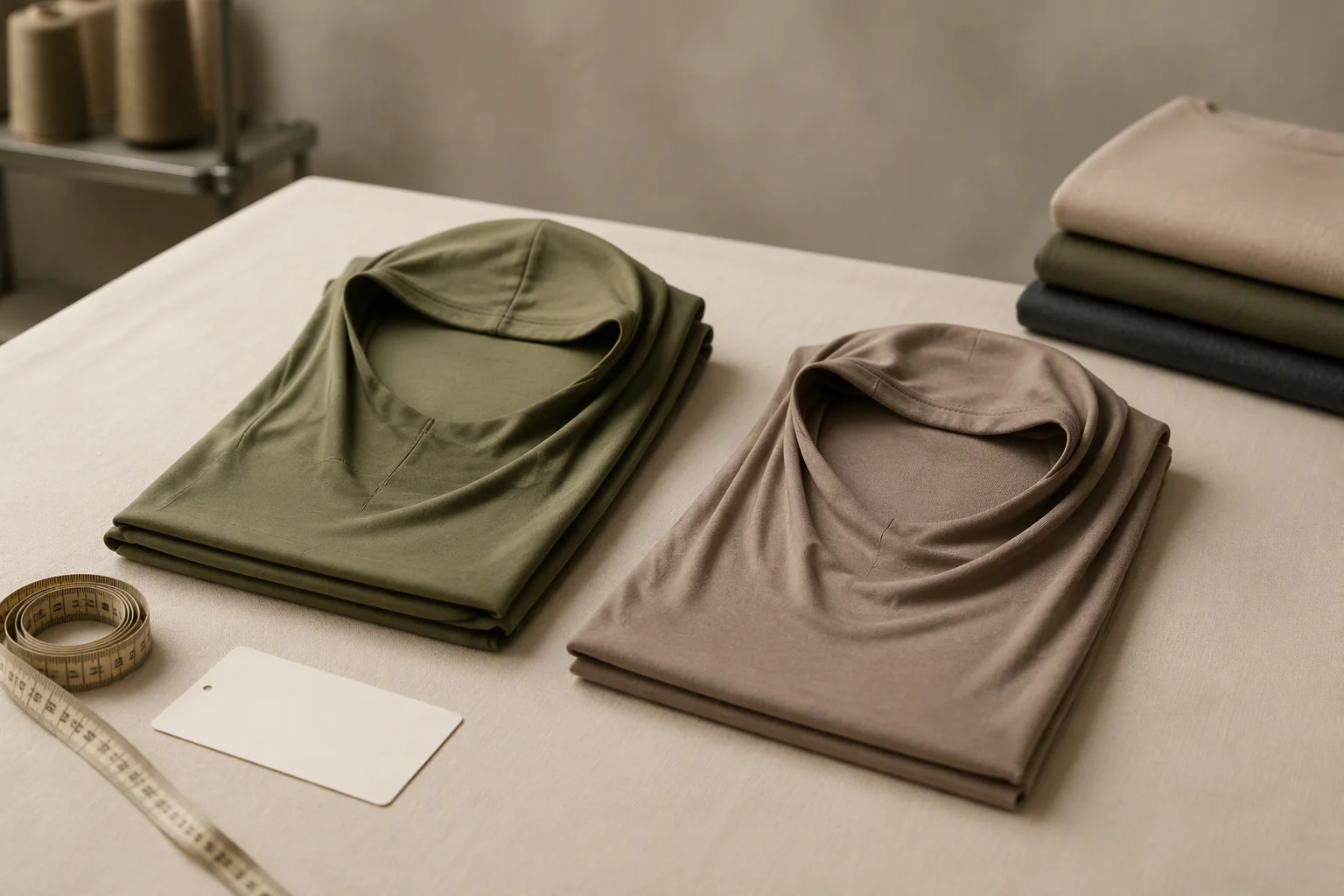
Instant and slip-on hijabs have moved from a convenience sub-category to a core line for many DTC modest-fashion brands. Younger buyers, new reverts, athletes, and busy professionals increasingly want a ready-to-wear piece they can pull on in seconds without pins, under-caps, or styling. For a brand, that demand is an opportunity — but only if the product is built correctly. A badly constructed instant hijab bags at the cap, scratches at the forehead seam, or twists out of shape after three washes, and the returns follow quickly.
This guide explains how an instant or slip-on hijab is actually made at the factory level: construction types, fabric and weight choices, stitch and edge standards, sizing logic, quality control, and the commercial terms (MOQ, sampling, lead time) a wholesale or OEM buyer should plan around. The goal is to help you write a tech pack that produces a product your customers keep.
Part 1: What 'instant' and 'slip-on' actually mean
The terms are used loosely in the market, so the first job is to pin down the construction, because each one costs and behaves differently.
Instant hijab (one-piece). A pre-sewn scarf — often a jersey tube or a shaped rectangle — with a stitched-in or bonded forehead edge so it frames the face without an under-cap. The wearer pulls it over the head and the drape falls into place. This is one integrated sewing operation.
Slip-on / pull-on (two-piece, al-amira style). A fitted tube cap plus a separate draped hood or scarf layer. The two pieces must be color-matched within ΔE 1.0, use the same or compatible GSM, and shrink at the same rate so they still look like a set after washing.
Jersey wrap-style instant. A long jersey piece with a sewn band that gives wrap-and-tuck styling without pins. Slightly more fabric, one seam operation.
Before we sample anything, we confirm which of these you mean in the tech pack. A brand that writes only 'instant hijab' and leaves the rest to the factory usually gets back a sample that is close but not what they imagined. Specifying the construction removes a full sampling cycle.
Part 2: Fabric and weight selection
Ready-to-wear hijabs live or die on fabric choice, because the fabric does the work that pins used to do — it has to hold shape and sit against the skin all day.
Cotton / viscose jersey (180-220 GSM, 4-6% elastane). The workhorse for instant and slip-on styles. The elastane gives the recovery that keeps the cap snug; the GSM gives enough body that the drape does not cling. Below ~170 GSM the piece feels flimsy and shows head shape; above ~230 GSM it gets warm and bulky at the cap.
Modal jersey (150-180 GSM). A lighter, more fluid pull-on for warmer climates and a dressier drape. Softer hand, more sheen, slightly less structure — we usually add a touch more elastane to compensate for recovery.
Bamboo viscose blends. Chosen for breathability and a cool hand, popular for sport-adjacent and summer lines. Needs careful shrinkage control (bamboo viscose can move 5-7% if not pre-shrunk), so we pre-wash the knit before cutting.
For any of these, elastane recovery is a measured property, not a guess. We test that the cap returns to within 2% of its relaxed circumference after stretch cycling, because that number is what stops the hijab bagging out at the hairline after a month of wear.
Part 3: Construction and stitch standards
The difference between a cheap instant hijab and a premium one is almost entirely in the seams and edges, because those are the parts that touch the skin and take the stress of pulling on.
Forehead / face edge. This is the critical edge. We use a flatlock or coverstitch finish, or a bonded (ultrasonic/heat-sealed) edge for a seamless premium look, so there is no raised overlock ridge scratching the forehead. A standard 3-thread overlock here is the single most common complaint driver on budget instant hijabs.
Seam stitch density. 12-14 stitches per inch (SPI) on structural seams. Too few and the seam grins open under pull-on stress; too many and the knit puckers.
Cap seam. For slip-on two-piece styles the tube cap seam is flatlock so it lies flat against the skull with no pressure line. We also check that the cap seam is positioned to sit above the ear, not on it.
Hem and drape edges. Baby-rolled, coverstitched, or raw-cut-and-bonded depending on the look. Jersey can be left clean-cut if the knit is stable, which many minimalist brands prefer.
Thread and elastane behavior. We match thread stretch to the fabric so seams flex with the knit instead of snapping or creating a rigid line.
Every one of these is written into the tech pack with a named stitch type and SPI so the sample and the bulk match. If your current supplier cannot tell you the SPI and edge type they use, that is a sign the product is being made to a price, not a standard.
Part 4: Sizing and grading
Instant and slip-on hijabs are closer to apparel than to flat scarves, because the cap has to fit a head, so sizing matters more than it does for a plain square.
Cap circumference. The fitted cap is typically graded across S/M/L (roughly 54 / 56 / 58 cm relaxed), or offered as a single stretch-to-fit size when the elastane content is high enough to cover the range. We confirm which model you want — single size is simpler to stock, graded sizes fit better and reduce returns for a premium line.
Drape length. Instant hijabs are usually offered in shorter (around 70-75 cm fall) and longer (85-95 cm fall) options. We set finished-length tolerance at +/- 2 cm.
Market fit. Gulf buyers often prefer a longer, fuller drape; European and North American DTC lines frequently want a shorter, sportier fall. We can grade the same cap to different drape lengths per market without re-tooling the cap pattern.
Grading is captured in the tech pack as a size chart with tolerances, so bulk production holds the fit you approved in sampling rather than drifting.
Part 5: Quality control
Because a ready-to-wear hijab is a fitted, worn product, QC covers both the fabric and the construction, and we inspect to AQL 2.5 before shipment.
Dimensional checks. Cap circumference +/- 1 cm, drape length +/- 2 cm, measured on a sampled percentage of the batch.
Seam and edge checks. Flatlock/coverstitch integrity, no skipped stitches, no raised forehead ridge, seam strength under pull-on stress.
Recovery and pilling. Elastane recovery to within 2% of relaxed cap size; pilling tested on the jersey face so the cap does not fuzz where it rubs the hairline.
Colorfastness and shrinkage. Wash-tested so a two-piece slip-on set still matches (within ΔE 1.0 cross-piece) and still fits after laundering; shrinkage held within the pre-approved allowance.
Color consistency. ΔE 1.0 against the approved lab dip, and crucially cross-piece for slip-on sets so the cap and drape do not drift apart in tone.
The inspection standard and the specific checks are agreed before bulk, so 'passed QC' means the same thing to you and to us.
Part 6: Working with the factory — MOQ, sampling, lead time
Here is what a wholesale or OEM program looks like in practice.
Sampling. A one-piece approval sample is available in 5-7 working days once the tech pack and fabric are confirmed. For a new construction (bonded edge, custom sewn-in cap, two-piece set) we may do one revision round before you approve bulk.
MOQ. Standard custom bulk MOQ is 100 pcs per color. Special constructions — bonded forehead edges, custom sewn-in caps, or coordinated two-piece slip-on sets — may require 300 pcs per color, confirmed in the quotation. The minimum applies per colorway, so you can plan several colors within one purchase order.
Bulk lead time. 25-35 working days depending on whether the fabric is stock or dyed-to-order and the size of the run.
Private label. We handle sewn-in brand labels, care labels with fiber content and wash symbols, and retail-ready packaging per your spec, so the product arrives ready to sell under your brand.
What to send us. The construction type (instant one-piece / slip-on two-piece / wrap), target fabric and GSM, cap sizing model (single stretch size or graded S/M/L), drape length, edge finish, colors with references, and your label and packaging requirements. The more of this is defined up front, the fewer sampling rounds you pay for.
Part 7: Common failure points and how we design them out
Most instant-hijab returns trace back to a short list of avoidable defects, and knowing them helps you brief the factory precisely.
Cap bagging. Caused by too little elastane or poor recovery testing. We fix it by specifying 4-6% elastane and stretch-cycling the cap before approval. If a sample bags in testing, it will bag worse at scale.
Scratchy forehead edge. Caused by a raw overlock seam at the face. We fix it with flatlock, coverstitch, or a bonded edge. This single detail drives a disproportionate share of one-star reviews on budget instant hijabs.
Twisting after wash. Caused by unbalanced knit tension or uncontrolled shrinkage. We fix it by pre-shrinking the knit and matching panel grain direction, and we wash-test before bulk.
Cross-piece color drift on slip-on sets. The cap and drape are often cut from different fabric lots. We fix it by dyeing both pieces from the same lot and checking ΔE 1.0 cross-piece, not just against the standard.
Cap seam pressing on the ear. A positioning error. We fix it by setting the seam above the ear line in the pattern, confirmed on the fit sample.
Designing these out at the tech-pack stage is far cheaper than discovering them through returns.
Part 8: Returns, conversion, and packaging
For a DTC brand, an instant hijab is a trust product: it is often a customer's first pin-free purchase, and the experience decides whether they reorder. A cap that fits, an edge that does not scratch, and a drape that holds shape after washing are what convert a trial buyer into a repeat buyer. That is why the construction standards above are commercial decisions, not just technical ones.
Packaging reinforces the same trust. We offer retail-ready folding, branded sleeves or boxes, and care labels that clearly show fiber content and wash symbols, so the unboxing matches the brand's price positioning. For subscription and gift-set programs, we can coordinate multi-piece packs with consistent sizing and color so the set reads as curated rather than assorted. Clear care guidance printed on the label also reduces wash-related returns, because many instant-hijab complaints are really laundering mistakes, not product defects.
Conclusion
Instant and slip-on hijabs reward brands that treat them as ready-to-wear apparel rather than as scarves. The fabric weight, the elastane recovery, the forehead edge finish, the stitch density, and the cap sizing are what separate a product customers reorder from one that gets returned. Specify those in the tech pack, confirm them in a sample, and hold them with AQL 2.5 QC, and you have a line that scales.
QiuYan Factory produces instant, slip-on, and wrap-style hijabs in modal, jersey, bamboo viscose, and Tencel Lyocell for DTC brands, boutiques, and OEM/ODM buyers across Europe, the Gulf, and North America. To request a sample or discuss a program, email melody@wennuanfactory.com or message WhatsApp +86 150 2459 7603.
Frequently Asked Questions
What is the difference between an instant hijab and a slip-on hijab in manufacturing terms?
Both are ready-to-wear, but the construction differs. An instant hijab is a pre-sewn piece — usually a jersey tube or a shaped scarf with a stitched-in cap area — that the wearer pulls on without pins. A slip-on hijab (sometimes called a pull-on or al-amira two-piece) typically pairs a fitted tube cap with a separate draped layer. From a factory view, the instant style is one integrated sewing operation with a bonded or sewn-in forehead edge, while the slip-on is two coordinated pieces that must match in GSM, color (within ΔE 1.0 cross-piece), and shrinkage. We confirm which construction you want in the tech pack before sampling. Questions: melody@wennuanfactory.com or WhatsApp +86 150 2459 7603.
What fabric weight and stitch standards do you use for instant hijabs?
For jersey instant hijabs we most often use 180-220 GSM cotton or viscose jersey with 4-6% elastane for recovery, giving a soft but structured pull-on fit. Modal pull-on styles run lighter at 150-180 GSM. Seams use flatlock or coverstitch at 12-14 stitches per inch (SPI) so the forehead and neck edges stay flat against the skin with no scratchy overlock ridge. Elastic recovery is tested so the cap does not bag out after wear. Finished dimensional tolerance is +/- 1 cm on cap circumference and +/- 2 cm on drape length.
What are the MOQ, sampling, and bulk lead times for instant hijabs?
A one-piece approval sample is available in 5-7 working days. Standard custom bulk MOQ is 100 pcs per color; special constructions (bonded edges, custom sewn-in caps, or two-piece slip-on sets) may require 300 pcs per color, confirmed in the quotation. Bulk production runs 25-35 working days depending on fabric dyeing and order size. We inspect to AQL 2.5 before shipment. To start, email melody@wennuanfactory.com or message WhatsApp +86 150 2459 7603.
Ready to Order