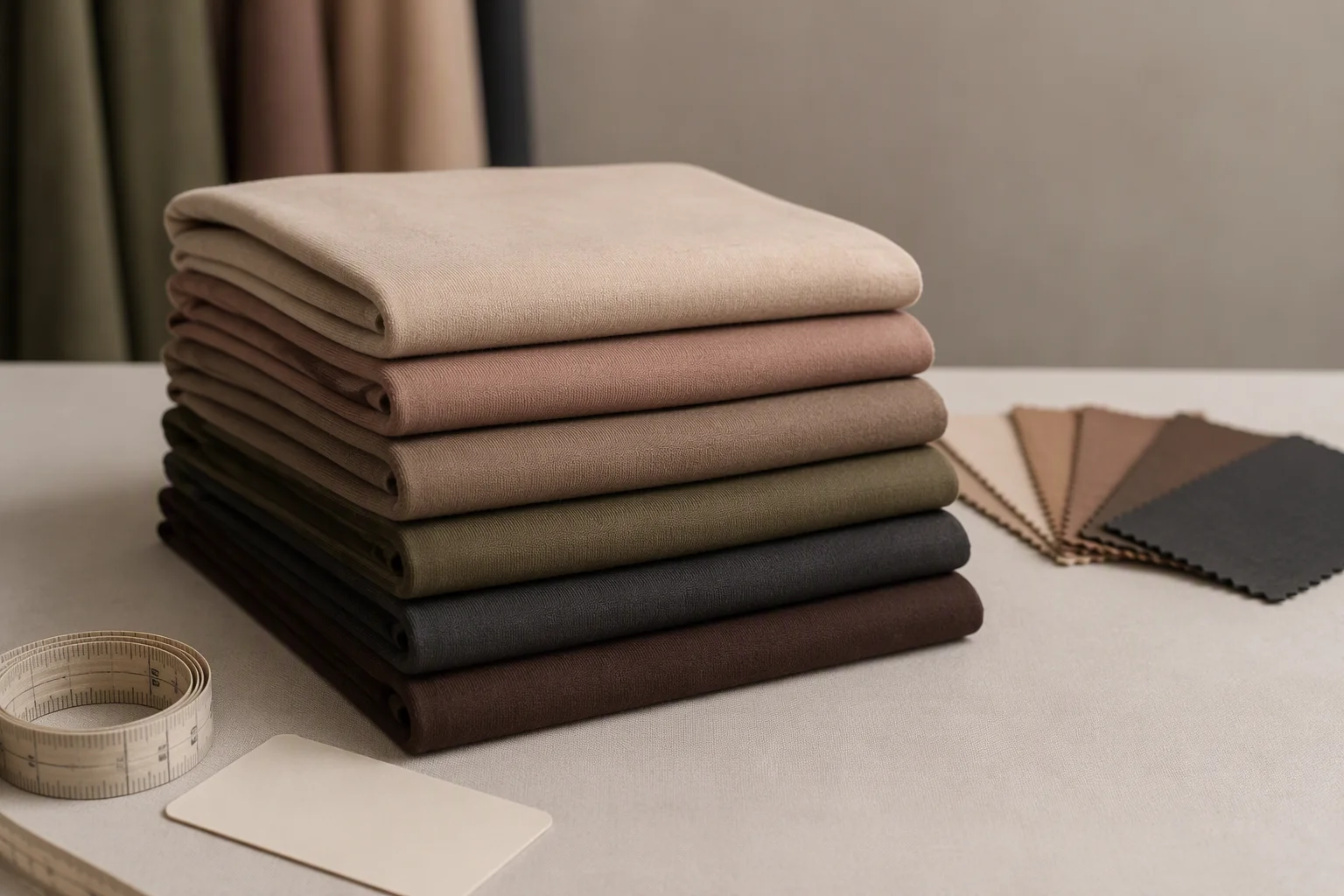
The economics of launching a modest-fashion brand have shifted. In 2026, DTC brands are moving away from broad seasonal assortments and toward leaner, data-led inventory — testing styles in small quantities, reading real sell-through, and reordering only the winners. The logic is simple: inventory ties up cash, and a hijab that sits in a warehouse is a worse outcome than one you never over-ordered. For a brand owner on Instagram or TikTok, the ability to launch a style small, see if it moves, and scale fast is now a competitive advantage.
That strategy only works if the factory behind it supports it. A supplier geared only for large, slow bulk runs forces brands into exactly the over-commitment they are trying to avoid. This guide explains how low-MOQ, small-batch, and quick-response (QR) manufacturing actually works at the factory level — the order sizes, the sampling and reorder lead times, the real cost trade-offs, and how to structure a test-and-scale program without sacrificing quality.
Part 1: Why small-batch sourcing wins in 2026
The shift is driven by three pressures that every DTC modest-fashion brand feels at once.
Cash and inventory risk. Every unit you produce is cash converted into stock. If it does not sell, that cash is frozen — or discounted away. Small batches keep more cash liquid and let a brand spread it across more styles, more tests, more chances to find a winner.
Trend speed. Social-driven demand moves in weeks, not seasons. A print or color can spike from a single viral post. Brands that committed to huge bulk runs six months ahead cannot react; brands that test small and reorder fast can ride the wave.
SKU proliferation. Modern modest-fashion ranges carry more colors, finishes, and styles than ever. Testing each one in a small batch is the only sane way to learn which SKUs deserve inventory, rather than guessing and over-producing across the board.
The factory's job is to make that test-and-scale loop cheap and fast. That means a workable MOQ, quick samples, and — critically — fast reorders on proven styles.
Part 2: What 'low MOQ' really means at a hijab factory
MOQ (minimum order quantity, the smallest number of pieces a factory will produce in one run) is the number most brands fixate on, but the nuance matters.
Standard custom MOQ: 100 pcs per color. For most jersey and modal styles, 100 pieces per colorway is both our standard bulk minimum and a sensible test quantity. It is enough to populate a product page, fulfil early orders, and read genuine sell-through — without the cash exposure of a 1,000-piece commitment.
Special constructions: 300 pcs per color. Styles with higher setup cost — bonded edges, two-piece slip-on sets, custom jacquard weaves — carry a higher minimum because the tooling and machine-setup time has to be amortized over the run. We flag this in the quotation so there are no surprises.
Per-color logic. The MOQ applies per colorway, not per order. A brand testing 5 colors orders 5 x 100 = 500 pcs. This is deliberate: dyeing is batched by color, and each shade is a separate dye lot held to ΔE 1.0.
The honest trade-off. A smaller run costs more per piece than a large one, because fixed costs (setup, dyeing minimums, inspection) spread over fewer units. We are transparent about this. The small-batch premium is the price of lower inventory risk — and for a brand testing demand, that is usually a good trade. Once a style proves itself, scaling up brings the per-unit cost down.
Part 3: The test-and-scale workflow
Here is how a quick-response program runs in practice, step by step.
Step 1 — Sample (5-7 working days). Once the tech pack and fabric are confirmed, we produce an approval sample in 5-7 working days. You check hand, drape, color, and finish against your brief before committing to any batch.
Step 2 — Test batch (100 pcs per color). You order a small batch of the approved style. Lead time is 25-35 working days for a first run with dyed-to-order color, less if the fabric and shade are from stock. This batch goes live on your store.
Step 3 — Read the data. You run the style for a few weeks and read real sell-through, return rate, and customer feedback. Winners and losers separate themselves.
Step 4 — Reorder winners fast (15-20 working days). For proven styles on a stock fabric and shade, reorders skip sampling and run about 15-20 working days — the quick-response advantage. Losers are simply not reordered, and you have risked only 100 pieces, not 1,000.
Step 5 — Scale the proven range. As a style establishes steady demand, larger reorders bring the per-unit cost down and you lock in a standing fabric and shade band for consistency.
This loop — sample, test, read, reorder — is the operational core of modern DTC sourcing, and it depends entirely on the factory holding quality steady across every batch size.
Part 4: Keeping quality identical from test to scale
The biggest fear brands have about small batches is that the test looks great and the scaled bulk drifts. We design against that by locking parameters at the sampling stage, not at each production run.
Fabric and GSM. The approved fabric quality and weight (for example 110-130 GSM for a standard modal square, heavier for winter weights) is fixed in the tech pack and used for every batch.
Color: ΔE 1.0. Every dye lot, in every batch size, is matched to within ΔE 1.0 of the approved lab dip. ΔE is the industry measure of color difference; 1.0 is the threshold below which the human eye struggles to see a difference. A reorder six months later should still match the original.
Dimensional tolerance. Finished size held to +/- 2 cm on standard squares, measured on a sampled percentage of every batch.
Edge and stitch standards. The named hem type (baby-rolled, pin-hem) and stitch density are specified once and repeated across runs.
AQL 2.5 on every batch. We inspect to AQL 2.5 (Acceptance Quality Limit, the statistical sampling standard that defines how many defects are tolerable in a batch) regardless of order size. A 100-piece test batch is inspected to the same standard as a 2,000-piece bulk run.
Because the specification lives in the tech pack and not in a single order, scaling changes the quantity and nothing else.
Part 5: Fabric strategy for quick response
The single biggest lever on reorder speed is fabric. Dyeing and knitting are the slow steps; if they are pre-solved, reorders fly.
Hold proven styles on stock fabric. We keep common modal and jersey qualities in greige (undyed) stock. A proven seller on a stock quality can be dyed and finished far faster than one requiring a special knit.
Lock a standing shade band. For a brand's core colors, we approve a shade band once and reorder against it, so each reorder does not restart color development.
Batch dye core colors. Brands running a consistent palette can schedule periodic dye runs so core shades are effectively on tap.
Reserve special fabrics for hero styles. Custom jacquard or specialty blends justify their longer lead time only on signature pieces, not on every test. Keeping the test range on standard fabrics keeps the whole test-and-scale loop fast and cheap.
A short conversation about fabric strategy at the start of a relationship pays off every time a style goes viral and needs restocking in weeks.
Part 6: The cost model — small batch versus bulk
Brands often ask whether small batches are 'worth it' given the higher per-unit price, and the honest answer is that the comparison should be made on total risk-adjusted cost, not sticker price per piece.
Per-unit price. A 100-piece run carries a higher unit cost than a 1,000-piece run because fixed costs — machine setup, the minimum dye charge, inspection labor — are spread over fewer units. There is no way around this physics, and we quote it transparently.
Risk-adjusted cost. The right question is not 'what does each piece cost' but 'what does each sold piece cost'. If a brand over-orders 1,000 units of a style that only sells 300, the 700 unsold units are either frozen cash or discounted to clear. The effective cost per sold piece on that bulk run can easily exceed the small-batch price. Testing at 100 pieces first, then scaling only proven winners, usually produces a lower blended cost across a whole range.
When to scale. Once a style shows steady sell-through, larger reorders bring the per-unit price down and the economics flip firmly in favor of volume. The test batch is not meant to be the forever order size — it is the filter that decides which styles earn a volume commitment.
Framing the decision this way helps brand owners resist the false economy of over-ordering for a lower sticker price.
Part 7: Logistics and replenishment rhythm
Quick response is not only a production question; it is also a logistics and planning rhythm, and the two have to work together.
Shipping mode by urgency. A first test batch can move by economical sea freight because it is not yet time-critical. A fast reorder of a style that is selling out may justify air freight for the first restock to avoid a stockout, then revert to sea for subsequent runs. We help brands plan which mode fits each stage.
Buffer stock on core styles. For established hero styles, holding a modest safety stock — either at the brand's warehouse or coordinated with us — bridges the reorder lead time so the product page never goes dark.
Consolidation. Brands reordering several proven styles at once can consolidate them into one shipment to reduce freight cost per piece, which partly offsets the small-batch premium.
Documentation ready. We prepare the compliance and shipping documents (fiber content, care labeling, OEKO-TEX documentation where required) so customs clearance does not become the hidden bottleneck that erases the speed gained in production.
Planning the replenishment rhythm alongside the production plan is what turns fast manufacturing into fast shelf availability.
Conclusion
Low-MOQ, small-batch, quick-response manufacturing is not a compromise — it is the sourcing model that fits how modest-fashion brands actually grow in 2026. Test styles small at a 100-piece MOQ, read real demand, and reorder the winners fast on standing fabric and shade, all held to the same ΔE 1.0 color, +/- 2 cm tolerance, and AQL 2.5 inspection as full bulk. The result is less cash frozen in dead stock, faster reaction to trends, and a cleaner path to scaling the styles that earn it.
QiuYan Factory supports test-and-scale programs for DTC brands, boutiques, and OEM/ODM buyers across Europe, the Gulf, and North America, producing modal, jersey, bamboo viscose, and Tencel Lyocell hijabs with a 100-pc standard MOQ, 5-7 day samples, and fast reorders on proven styles. To scope a small-batch program, email melody@wennuanfactory.com or message WhatsApp +86 150 2459 7603.
Frequently Asked Questions
What is the real minimum order quantity (MOQ) for a small test batch of hijabs?
Our standard custom bulk MOQ is 100 pcs per color, and that same figure works as a realistic test batch for most DTC brands — enough to validate demand without over-committing cash. Special constructions (bonded edges, two-piece sets, custom jacquard) may require 300 pcs per color because the setup cost is higher. For brands that want to test several colors at once, the MOQ applies per colorway, so a 5-color trial is 500 pcs total. We confirm the exact figure per style in the quotation. To scope a test program, email melody@wennuanfactory.com or WhatsApp +86 150 2459 7603.
How fast can I reorder a style that sells well?
This is where quick-response sourcing matters. If the fabric is a stock quality we hold (common modal and jersey weights), a reorder of a proven style runs about 15-20 working days because we skip sampling and dyeing is the only variable. If the color is dyed-to-order, allow 25-35 working days. We recommend proven sellers move to a standing fabric and shade so reorders stay fast. Planning a reorder cadence with us in advance shortens the gap between a style going viral and restock landing.
What factory parameters stay the same between a test batch and full bulk?
Everything that defines the product: fabric and GSM, color within ΔE 1.0 of the approved lab dip, dimensional tolerance (+/- 2 cm on standard squares), edge finish, stitch density, and AQL 2.5 inspection. A test batch is a smaller quantity, not a lower standard. Because the specs are locked in the tech pack at sampling, scaling from 100 pcs to 1,000 pcs changes the volume but not the look, hand, or quality — which is the whole point of testing before you scale.
Ready to Order